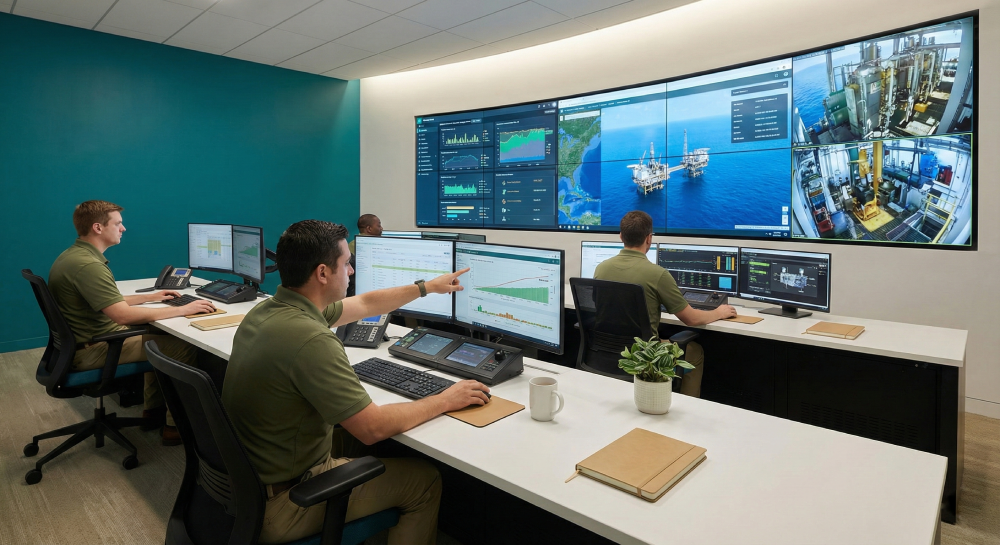

Unified retail operations platform improving inventory accuracy and customer

Driving growth through operational clarity. For retail and commerce groups, we deliver platforms that unify operations, logistics, and customer engagement.
Background
A major retail chain with 250+ stores across multiple regions struggled with fragmented systems that created operational silos. Inventory management was scattered across spreadsheets and disconnected systems, leading to stockouts in some locations while overstock accumulated in others. Supply chain visibility was poor, making it impossible to optimize logistics costs. Store managers lacked real-time data on customer behavior, forcing reactive rather than data-driven merchandising decisions. Point-of-sale systems didn’t integrate with backend inventory, creating manual reconciliation work and customer service delays.
Customer acquisition and retention were suffering as the retailer couldn’t provide personalized experiences or omnichannel consistency. Marketing campaigns couldn’t be effectively targeted due to siloed customer data. Returns management was manual and inefficient, damaging brand reputation. Employee productivity suffered from the need to manually reconcile systems and hunt for information. Competitive pressure was intense as online retailers offered better customer experiences and faster order fulfillment, threatening market share and profitability.
The Solution
We designed a unified retail operations platform that integrated inventory management, supply chain, point-of-sale systems, and customer data into a single source of truth. Real-time inventory visibility across all locations enabled dynamic inventory allocation and demand planning. The platform used advanced analytics to forecast demand patterns and optimize stock levels, reducing both stockouts and overstock situations.
Supply chain optimization algorithms automatically calculated optimal order quantities, reorder points, and distribution routes to minimize logistics costs while meeting service level requirements. Integration with supplier systems enabled automated purchase orders and real-time tracking of incoming inventory. Multi-warehouse fulfillment logic ensured fastest and most cost-effective shipment from the nearest location.
Unified customer data platform consolidated customer information from all touchpoints – online, mobile, in-store – creating a single customer view. Machine learning algorithms identified high-value customers, predicted churn risk, and recommended personalized offers. Omnichannel marketing campaigns delivered consistent messaging across channels while respecting customer preferences and purchase history.
Returns management automation simplified the process through QR code tracking, instant refund processing, and automated restocking workflows. Return items were automatically evaluated for resale value and routed accordingly. Real-time returns analytics identified product quality issues and customer satisfaction trends, feeding back into product planning.
Store staff received mobile apps with real-time inventory access, task management, and customer context. Point-of-sale systems gained access to complete customer purchase history and intelligent recommendations. Comprehensive training programs ensured staff understood the new systems and could leverage data for better customer service. Change management was critical to gain frontline staff buy-in for the new workflows and data-driven decision-making culture.
The Challenges
Integrating hundreds of legacy point-of-sale systems, inventory databases, and e-commerce platforms was technically complex. Data quality issues in historical records required extensive cleanup. Continuous store operations meant the migration had to happen without disrupting sales. Legacy systems often had limited or no APIs, requiring custom integration middleware. Data security and privacy compliance were critical given customer PII and payment card data involvement.
We implemented a phased rollout starting with pilot stores, using parallel processing where both old and new systems ran concurrently to verify data accuracy. Custom data transformation utilities cleaned and validated historical data. API gateway architecture provided flexible integration patterns that accommodated varying legacy system capabilities without requiring extensive modifications to each system.
Comprehensive PCI-DSS and data privacy compliance assessments ensured secure payment processing and customer data protection. Encryption and tokenization protected sensitive information at rest and in transit. Role-based access controls restricted data visibility to authorized personnel only. Regular security audits and penetration testing verified the robustness of the platform’s security architecture.
The investment in this unified platform delivered substantial ROI through improved inventory efficiency, reduced logistics costs, and increased sales. Real-time operational visibility enabled faster decision-making. The platform’s flexibility allowed the retailer to quickly adapt to market changes and competitive threats. Employee satisfaction improved as staff had better tools and more information to serve customers effectively.
The Result
Inventory accuracy improved to 99%+, essentially eliminating stock discrepancies. Stockout rate decreased 67% while overstock situations were reduced by 71%. Supply chain response time improved from weeks to days. Same-store sales increased 24% in the first year due to improved product availability and personalized customer engagement. Customer retention improved from 52% to 79%, and customer lifetime value increased 38%.
This platform has transformed how we operate across our 250+ store network. What used to take weeks of manual analysis now happens in real-time, enabling us to make data-driven decisions at store and corporate levels. Inventory efficiency improvements alone have freed up significant working capital. But equally important, our customers now experience better availability, faster service, and personalized offers – which is directly reflected in our improved retention rates. The platform has been a genuine competitive advantage in a tough retail environment.
Chief Operations Officer, Multi-Store Retail Chain
Logistics cost savings exceeded 31% through optimized delivery routes and improved warehouse utilization. Dynamic inventory allocation reduced holding costs while maintaining higher service levels. Markdown rates improved as data-driven pricing and inventory optimization reduced the need for clearance sales. Marketing ROI improved significantly with targeted campaigns to high-value customer segments based on behavioral analytics.
Omnichannel capabilities enabled seamless customer experiences whether shopping online, mobile, or in-store. Buy-online-pickup-in-store (BOPIS) functionality became a popular service, driving foot traffic and cross-selling opportunities. Real-time inventory visibility across channels eliminated overselling while improving fulfillment speed. Integrated loyalty programs rewarded customer engagement across all touchpoints, strengthening customer relationships.
Future capabilities are being built on this foundation including predictive demand forecasting using AI, dynamic pricing optimization, and automated store replenishment. The platform’s modern architecture enables rapid feature development and deployment of new capabilities. The retailer is now positioned as a data-driven, customer-centric competitor in an increasingly omnichannel retail landscape, with the operational clarity needed to compete effectively against pure-play e-commerce rivals.